Are You Feeling Like You Can’t Perform In Your Career Anymore?
If you have been experiencing strange, unfamiliar symptoms that are throwing you off your A-game, you’re not alone.

Maybe you have been experiencing some (or all) of the following:
You’re in a meeting, discussing a new major project with your team, and your mind goes blank and you lose your train of thought mid-speech.
You walk up to a colleague to discuss something, only to forget why you went to see them.
During a meeting with the senior manager, you feel a hot flash coming on and you cannot focus on anything but worrying how you can hide the fact that you are starting to sweat and your heart is racing.
You haven’t slept well in weeks and any little thing can make you feel like you want to cry.
You are starting to feel obsolete at work — that you don’t matter anymore, and you’re worried that your peers will no longer respect you once they realise what you are going through.
You work predominantly with men or younger women, so there is nobody to confide in. You feel very alone.
These are real fears by women who are transitioning into
perimenopause or already in menopause.
You are going through the hardest season of your life,
so give yourself some credit.
Remember, this is a transition, so you won’t always feel like this, but this is your new normal for now. Your body knows what it’s doing, but it needs some help from you in terms of the choices you make from now on.
My Story
I remember getting out of my car (after a 1.5-hour commute to work) and feeling like my legs were made of lead.
My legs felt so heavy (something I hadn't experienced before) that I put it down to sitting in the car for so long.
I then started noticing this same feeling when only sitting for a short time, and it was significantly worse when climbing stairs — to the point where I felt like I had done a gruelling workout!
I was also getting heavier, longer periods that would sometimes last up to 3 weeks.
I was in a new job, excited at the prospect of thriving in a friendly, fast-paced environment.
While still in my six-month probation period, I started getting my first hot flashes. I knew instantly that this was the start of my transition and it set me into panic mode!
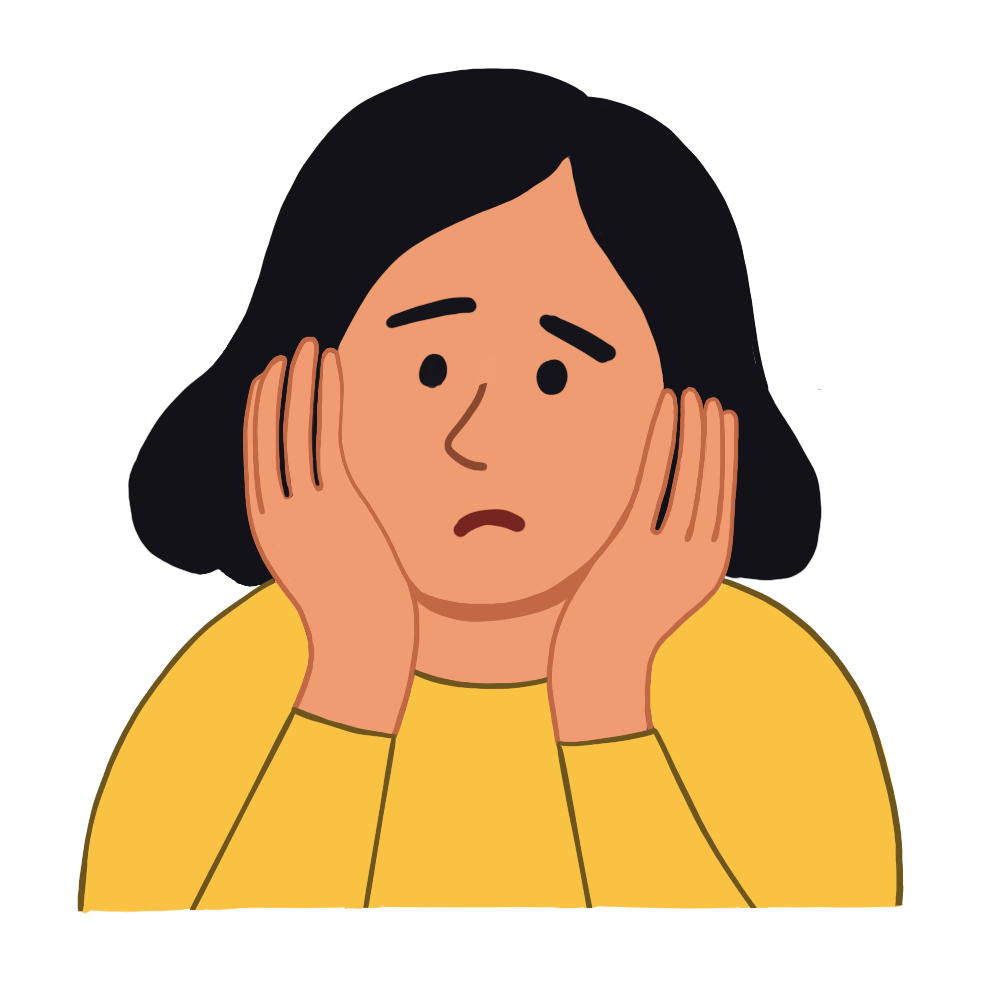
How was I going to hide this at work?
Everyone was younger than me, including senior management.
I’d be just sitting at my desk or in a meeting when I'd start getting a nasty feeling come over me (it’s still hard to put into words) and small beads of sweat would start to form on my upper lip.
Seconds later I felt like someone had ignited a flame thrower in my chest, neck and head!
It was so distracting that all I could think about was the heat and if I was going to collapse onto the floor, until the feeling passed.
I’d put my hand by my mouth (to discreetly wipe away the sweat) and pretend I’m reading something on the screen (or in a meeting, act as if . The reality was that I was waiting for this awful feeling to pass — it consumed my thoughts entirely so concentrating was out of the question.
Eventually the feeling would pass and I could return to my work again. Nobody seemed to notice — phew!
Nothing and nobody prepared me for this.
Is this how my life was going to be going forward?
As time went on, I started to forget - A LOT!
It got so bad at one point that in the afternoon I had no recollection of a conversation I’d had with my manager that morning. This was when I really felt scared.
Thankfully, I passed my probation period, despite the war erupting in my body and mind.
One day I decided to confide in my manager of what I was going through, and thankfully he was sympathetic, but it was a risk for me to do this. However, by the time I had confided in him, I had proved what I was capable of in my role, so I had hedged my bets so to speak.
I remember coming into work one day with a headache, dizziness, and probably looked as rough as the previous night I had experienced.
I was having trouble falling asleep, and as each hour passed, knowing I had to get up for work, the anxiety compounded.
My manager came and sat next to me and asked what was wrong. As I explained that I had not slept well in weeks, my eyes filled with tears. He told me to go home and get some rest, and I really appreciated his kindness.
When The Hormone Shift Begins, What Happens Next?
Perimenopause can start as early as your mid-30s, although for the majority of women usually don't experience symptoms until their mid-40s.
This is when your stress response, focus, sleep quality, and emotional regulation all change. This is especially challenging during demanding workdays.
Demanding workdays become much more challenging.
Simple tasks feel overwhelming
You withdraw from others, and no longer interested in their demands
You forget simple things, and at a loss for some words
You snap or tear up over minor things
You get anxiety attacks for no apparent reason
Sleep is no longer predictable
Unexplainable weight gain - especially around your middle
You don’t recognise who you are looking at in the mirror
Confidence drops
None of this is in your head, and you are NOT failing.
It means your body is calling for support.
I decided I had to find out exactly what was going on with my body, and what my options are to have a normal life again.
I read many books and researched online to get a proper understanding of why I was feeling so horrible, to the extent of feeling like I was having an out-of-body experience. I was miserable and I needed answers. This is when I discovered that my hormones and my nervous system were working against each other.
I tried all types of HRT therapy that were available to me but I had significant reactions to estrogen applied to my skin. The only other option was to take oral HRT (which I did for 2 years) but decided to stop it after not getting any real benefit from it.
I had to find other ways to help me get through this transition, and that’s exactly what I did.
I’m not a doctor — I’m a woman who lived this while still being expected to perform.
I didn’t have the luxury of being able to quit my job.
I had responsibilities, deadlines, people who relied on me.
There was no time to fall apart.
It was small shifts that turned into habits that helped me the most.
My mood started to improve, my sleep patterns were more reliable, my memory didn’t betray me like before, my stress wasn’t as pronounced.
It took me years to get to this point, and I remember how I had to go it alone. This is when I realised that this information should be given to us sooner.
Every woman on this planet who lives long enough to reach this stage in life has to go through this to some degree — no woman escapes this.
This is why I created the Midlife Shift Guide.
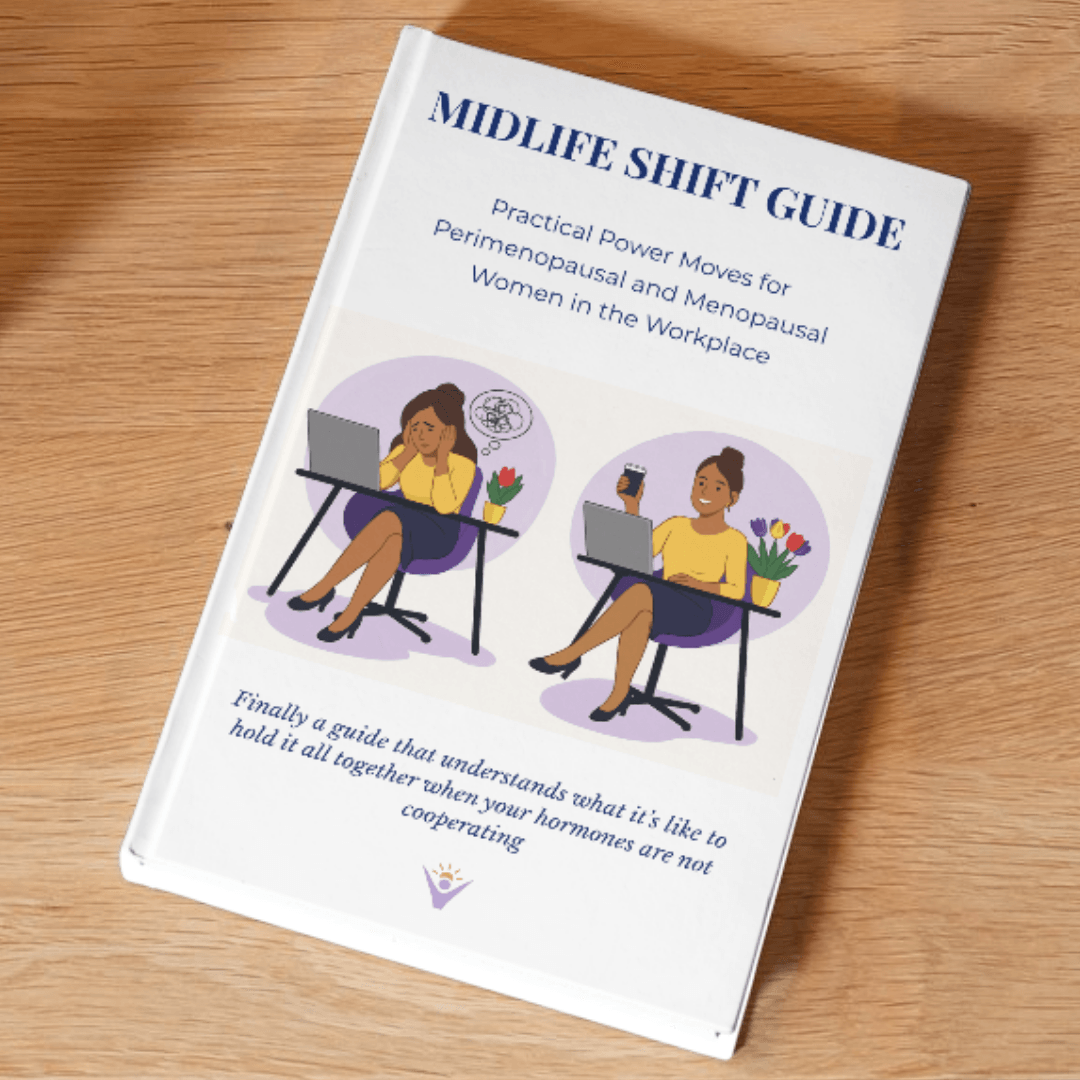
It’s a straightforward guide, written by a woman who’s walking this journey with you.
Simple steps
Clear explanations
Realistic adjustments
Fast wins
Strategies that actually help you feel stable again, so you can perform at your best in the workplace and in your personal life.
A medical manual.
A hormone textbook.
A fluffy feel-good PDF.
I wish this guide was available when I was navigating through perimenopause and menopause.
Learn More About the Midlife Shift Guide (£9)
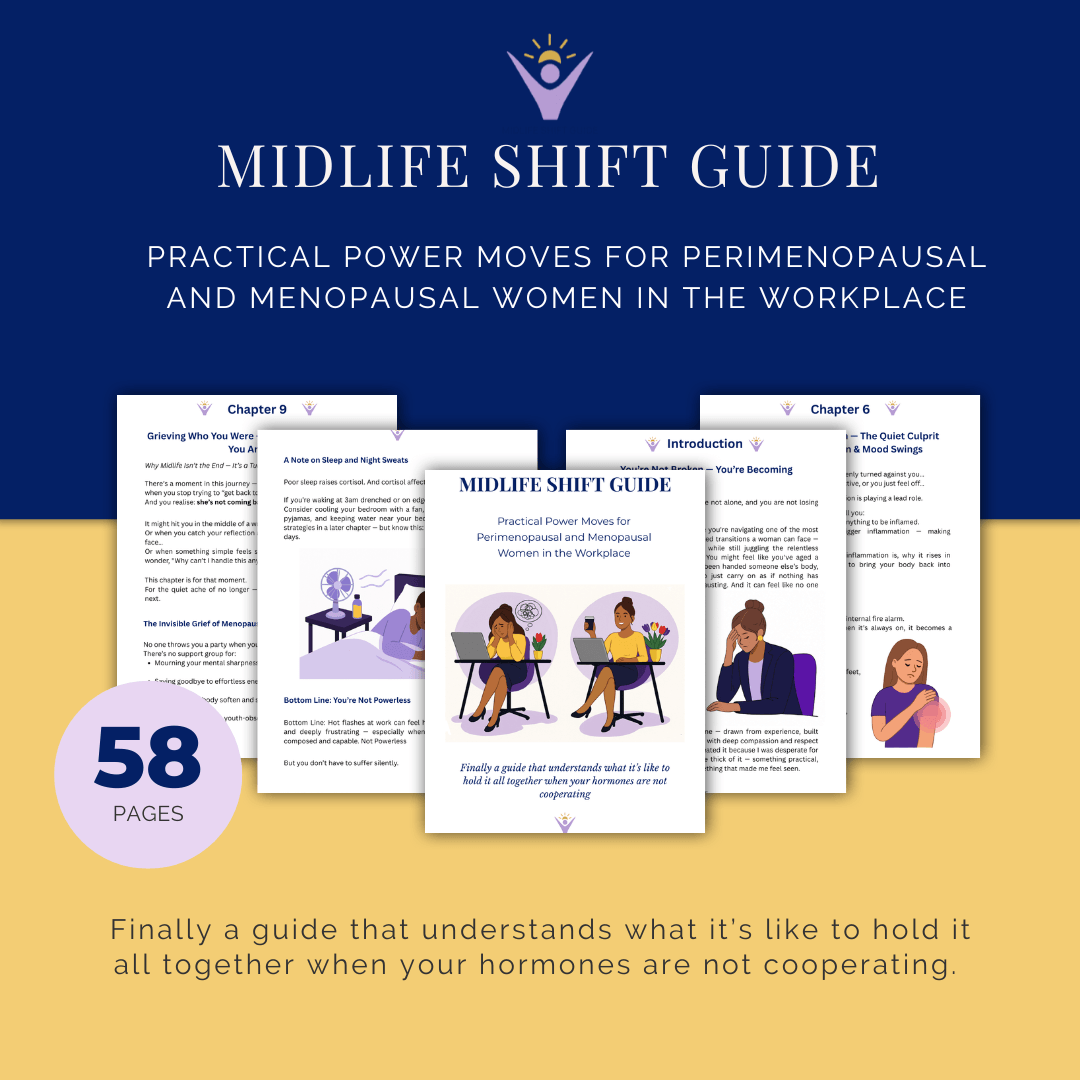
If you’re ready for a practical, step-by-step plan to feel more in control, you can read what’s inside the guide here:
Join the Midlife Support Circle — it's FREE!
By subscribing, you’ll receive short, digestible emails about:
What’s actually happening inside your body
Simple brain and body resets
Ways to feel more grounded
Clarity boosters for stressful workdays
Sometimes you will hear about my products or other products that I personally use that I feel could be beneficial to you. But I promise I will not try to sell to you products that I have no experience of.
As a thank you for subscribing, you will receive 5 .... cheat sheet.
About the Author

Created by a woman who's lived it — and had to lead through it.
I'm Jill, a senior leader in the corporate world and a lifelong researcher of health and wellbeing.
When perimenopause hit, I was managing teams, reporting to senior stakeholders, and trying to hold myself together while my body changed faster than I could keep up.
Nothing I found felt practical or clear — especially for women trying to stay sharp, capable, and confident at work.
So I created the guide I desperately needed: simple, grounded, compassionate support for women navigating the hardest hormonal transition of their lives while still carrying everything on their shoulders.
Privacy Policy | Terms & Conditions | Legal
© Midlife Shift Guide 2025. All rights reserved.
support@midlifeshiftguide.com